

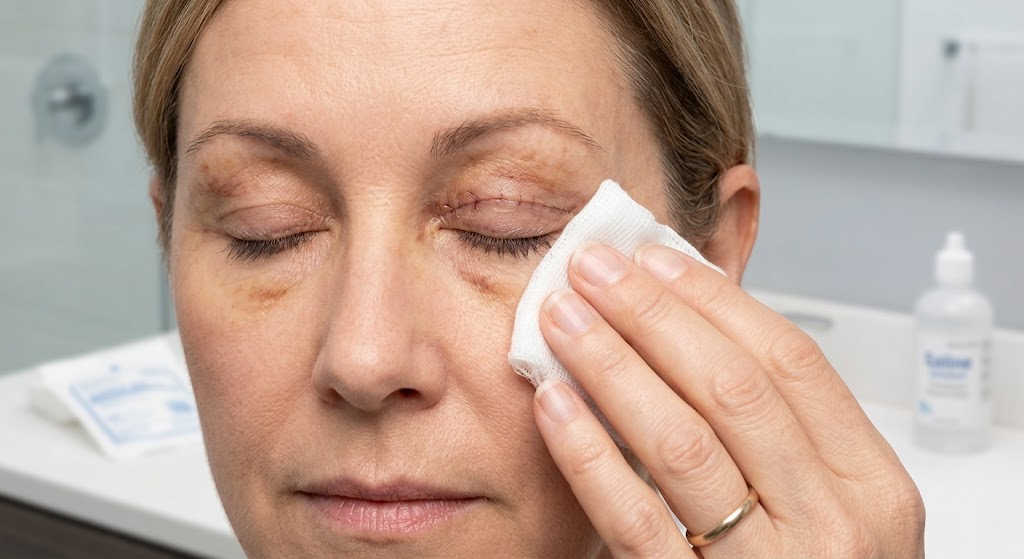
After blepharoplasty, keeping the eye area clean is a critical part of recovery. However, washing eyes after blepharoplasty too early or using the wrong technique can irritate healing incisions, introduce bacteria, and slow the recovery process. Knowing the correct timeline and method for eye cleaning after blepharoplasty helps protect surgical results and reduce the risk of complications.
- When Can I Wash My Eyes After Blepharoplasty?
- Why Proper Eye Cleaning After Blepharoplasty Matters
- Blepharoplasty Recovery Timeline Day by Day
- How to Safely Wash Your Eyes After Blepharoplasty
- What to Avoid After Blepharoplasty
- When Can Patients Wash Their Face After Eyelid Surgery?
- Signs of Cleaning the Eyes Too Aggressively
- Best Products to Use After Blepharoplasty
- Blepharoplasty Aftercare Tips for Faster Healing
- When to Contact the Surgeon
- Choosing an Experienced Blepharoplasty Surgeon
- About Dr. Sumeet Jindal
- Final Thoughts
This guide covers everything patients need to know about blepharoplasty aftercare, from the first 24 hours through full recovery, with step-by-step cleaning instructions and red flags to watch for.
This content is aligned with the clinical approach of Dr. Sumeet Jindal, a board-certified surgeon specializing in facial and gender-affirming procedures at JIYA Cosmetic, serving patients seeking blepharoplasty Raleigh NC and surrounding areas.
When Can I Wash My Eyes After Blepharoplasty?
Most patients can begin gently cleaning around the eyes within 48 to 72 hours after surgery. Direct water pressure on the incision site should be avoided entirely during early recovery. Sterile gauze or soft cotton pads are recommended over washcloths. Full, normal washing eyes after blepharoplasty is typically safe after one to two weeks, depending on how healing progresses and the specific guidance provided by the treating surgeon.
Why Proper Eye Cleaning After Blepharoplasty Matters
The skin around the eyes is among the thinnest on the body. After eyelid surgery, incision sites are particularly vulnerable to irritation, infection, and trauma. Proper eye cleaning after blepharoplasty serves several important functions.
It removes crust and dried discharge that accumulate along the incision line, which can harbor bacteria if left in place. Gentle cleaning also reduces irritation caused by natural eye secretions pooling near healing tissue. Maintaining a clean environment around the incision supports faster cell regeneration and minimizes the risk of post-surgical infection.
Aggressive cleaning, on the other hand, can reopen sutures, cause bleeding, introduce pathogens, and prolong the inflammation phase of healing.
Blepharoplasty Recovery Timeline Day by Day
The blepharoplasty recovery timeline follows a predictable pattern. Understanding what to expect at each stage helps patients manage expectations and recognize normal versus concerning changes.
First 24 Hours
Swelling after blepharoplasty and bruising typically peak within the first 24 hours. The eyelids may feel tight and vision may be temporarily blurred due to swelling and any lubricating ointment applied during surgery. Patients should rest with the head elevated above the heart, apply cold compresses for 10 to 15 minutes at a time to reduce swelling, and avoid touching or rubbing the eyes entirely.
Days 2 to 3
Gentle cleaning around the eye area may begin during this window, provided the surgeon has not given alternative instructions. Sterile saline solution or a surgeon-approved cleanser applied with a soft cotton pad is appropriate at this stage. The goal is to remove light crust near the lash line without disturbing the incision itself.
Days 4 to 7
Bruising after eyelid surgery typically shifts from deep purple to yellow-green tones as the body reabsorbs blood pooled in the tissue. Some crusting along the incision line is normal and expected. Continued gentle cleansing is recommended. Patients should avoid pulling at any crust and allow it to loosen naturally with saline application.
Week 2: Blepharoplasty Recovery Week 1 to 2
Most sutures, if non-dissolvable, are removed during the second week. Bruising is largely resolved for many patients, and swelling after blepharoplasty continues to diminish. Light washing around the eyes becomes easier and more comfortable. Makeup and skincare products near the eye area should still be avoided at this stage.
Weeks 3 to 6
Residual swelling continues to reduce gradually as part of the later eyelid surgery healing stages. Incision lines mature and begin to fade. Most patients can return to their full normal skincare routine, including gentle use of face wash near the eyes, after receiving clearance from their surgeon. Final results continue to develop for several months as scar tissue softens.
How to Safely Wash Your Eyes After Blepharoplasty
The best way to clean eyes after eyelid surgery is to follow a consistent, gentle technique. The steps below reflect general best practices and should be adapted based on individual surgeon instructions.
Step 1: Wash Your Hands First
Before touching the eye area, wash hands thoroughly with soap and water for at least 20 seconds. This step eliminates surface bacteria that could be transferred to the incision site.
Step 2: Use Sterile Gauze or Soft Cotton Pads
Standard washcloths are too coarse for post-surgical skin. Sterile gauze squares or pharmaceutical-grade cotton pads are preferred because they are soft, lint-free, and less likely to catch on healing tissue.
Step 3: Use Saline Solution or Lukewarm Water
Sterile saline solution is the safest choice for early cleaning. It is isotonic, meaning it matches the body’s natural fluid composition, and therefore causes minimal irritation. Lukewarm water can be used once the incision is more established, typically after the first week.
Step 4: Clean Gently Around the Eyes
Dampen the gauze or cotton pad and use light, sweeping motions to clean from the inner corner of the eye outward. Avoid circular scrubbing motions. Replace the pad with a fresh one for each eye to prevent cross-contamination.
Step 5: Avoid the Incision Line
Do not rub directly over the suture line. If crust has formed along the incision, hold a dampened pad gently against the area for 30 to 60 seconds to soften the crust before attempting removal. Never pull or pick at sutures or dried tissue.
Step 6: Pat Dry Carefully
After cleaning, use a dry sterile pad or clean tissue to gently pat the area dry. Avoid rubbing. Leaving the skin damp around a healing incision can encourage bacterial growth.
Step 7: Apply Prescribed Ointment if Recommended
Many surgeons prescribe an antibiotic or lubricating ointment as part of post blepharoplasty care to be applied along the incision line after cleaning. Follow the specific product and frequency instructions provided by the treating surgeon.
What to Avoid After Blepharoplasty
Certain behaviors and products significantly increase the risk of complications during upper eyelid surgery recovery and lower eyelid surgery aftercare. Patients should avoid the following.
- Rubbing or touching the eyes, particularly during sleep
- Hot water or steam exposure, including saunas and hot showers directed at the face
- Heavy skincare products, exfoliants, or retinoids near the incision site
- Makeup, including eye shadow, liner, and mascara, until surgeon-cleared
- Swimming pools, hot tubs, and open water due to bacterial exposure
- Contact lenses for at least two to three weeks post-surgery
- Sleeping face-down, which increases pressure and swelling around the eyes
- Excessive screen time, which strains the eyes and can worsen dryness
- Smoking, which impairs circulation and delays wound healing
- Alcohol consumption during the acute recovery phase
When Can Patients Wash Their Face After Eyelid Surgery?
Surgeons usually recommend to clean their face with a damp cloth from the chin down for the first 48 hours, but must strictly avoid the eye area and prevent the incisions from getting soaked. Most surgeons allows patients to use gentle cleanser around the eyes and water can be permitted mostly after 5 days or once the suture is removed.
It is advisable to get a consultation with the surgeon before taking any steps.
Signs of Cleaning the Eyes Too Aggressively
Overcleaning or improper technique can be just as harmful as neglecting hygiene. The following signs may indicate that cleaning is causing irritation or trauma to the healing tissue.
- Increased redness or warmth around the incision line
- Reopening of the incision or visible bleeding after cleaning
- Burning or stinging sensations that worsen rather than improve over time
- Swelling that is noticeably worse following a cleaning session
- Yellow, green, or thick discharge that suggests infection
- Pain that intensifies rather than gradually resolves
If any of these signs are present, patients should stop cleaning and contact their surgeon promptly.
Best Products to Use After Blepharoplasty
Selecting the right products is a key part of blepharoplasty aftercare. The following are widely recommended by surgeons during the post-operative period.
- Sterile saline solution: available in unit-dose ampules or spray bottles, preservative-free formulations are preferred
- Fragrance-free, hypoallergenic facial cleansers: suitable for use on areas adjacent to the eyes once healing permits
- Sterile gauze pads or non-woven cotton pads: gentler than cotton balls, which can leave fibers near the incision
- Surgeon-prescribed antibiotic ointments: commonly Erythromycin or Bacitracin, applied as directed
Patients should not introduce any new skincare products into their routine without discussing them with their surgeon first.
Blepharoplasty Aftercare Tips for Faster Healing
These blepharoplasty healing tips cover recovery practices beyond eye cleaning. Holistic aftercare meaningfully supports the overall healing process.
- Sleep with the head elevated on two to three pillows for the first week to reduce fluid accumulation around the eyes
- Stay well-hydrated throughout recovery to support tissue repair and reduce inflammation
- Maintain a diet rich in protein, vitamins C and E, and zinc, all of which play roles in wound healing
- Apply cold compresses during the first 48 hours to minimize swelling, switching to warm compresses after four to five days only if recommended by the surgeon
- Wear sunglasses and apply SPF when outdoors, as healing incisions are sensitive to UV exposure and can hyperpigment
- Follow all surgeon instructions precisely, including medication schedules and activity restrictions
- Avoid strenuous exercise, heavy lifting, or bending at the waist for at least two to three weeks post-surgery
When to Contact the Surgeon
Certain symptoms following blepharoplasty require prompt medical attention. Patients should contact their surgeon immediately if they experience any of the following.
- Sudden changes in vision, including blurriness, double vision, or loss of peripheral sight
- Severe pain that does not respond to prescribed pain medication
- Fever above 101 degrees Fahrenheit
- Rapid or unexpected increase in swelling, particularly if asymmetric
- Pus, green or yellow discharge, or foul odor from the incision site
- Heavy or uncontrolled bleeding
These symptoms may indicate serious complications including hematoma, infection, or orbital damage. Early intervention is critical to preserving both vision and surgical outcomes.
The American Academy of Ophthalmology provides evidence-based guidance on eyelid surgery risks and post-operative safety, which serves as a useful reference for patients evaluating their recovery progress against clinical benchmarks.
Choosing an Experienced Blepharoplasty Surgeon
The quality of surgical technique directly affects the cosmetic eyelid surgery recovery experience and long-term results. Experienced surgeons create precise incisions that minimize trauma to surrounding tissue, which translates to shorter healing times and reduced risk of complications.
Personalized post-operative care is equally important. A surgeon who provides detailed, patient-specific eyelid surgery aftercare instructions, remains accessible during recovery, and adjusts recommendations based on individual healing patterns produces better outcomes than a one-size-fits-all approach.
Patients seeking blepharoplasty Raleigh NC benefit from working with a surgeon who understands both the functional and aesthetic goals of eyelid surgery. At JIYA Cosmetic, patients receive comprehensive post-operative guidance designed to support safe healing and optimal outcomes.
About Dr. Sumeet Jindal
Dr. Sumeet Jindal is a board-certified oculofacial cosmetic surgeon with extensive experience in facial and gender-affirming procedures. His practice is centered on surgical precision, patient safety, and natural-looking results. Dr. Jindal approaches each blepharoplasty case with a thorough evaluation of the patient’s anatomy, goals, and health history to develop an individualized surgical plan.
His patient-centered philosophy extends into the recovery period. Every patient receives detailed blepharoplasty aftercare instructions, access to post-operative support, and follow-up care designed to identify and address any healing concerns promptly.
Consultations with Dr. Jindal provides patients the opportunity to ask detailed questions about what to expect before, during, and after blepharoplasty, including timelines for when can I wash my eyes after blepharoplasty and resume normal activities.
Final Thoughts
Recovery from blepharoplasty requires patience and attention to detail. Rushing the eye cleaning after the blepharoplasty process or using the wrong technique can interfere with incision healing and compromise surgical results. Most patients can begin gentle cleaning within 48 to 72 hours and resume more normal washing routines after one to two weeks.
Choosing a skilled surgeon and following their specific blepharoplasty aftercare instructions are the two most important factors in achieving a smooth, complication-free recovery. Patients considering upper eyelid surgery recovery or lower eyelid surgery are encouraged to schedule a consultation with Dr. Sumeet Jindal at JIYA Cosmetic to discuss their goals and receive a personalized care plan.
Contact Us on (919) 929-6006 schedule a consultation for blepharoplasty Raleigh NC and take the first step toward natural, refreshed results under the care of an experienced surgical team.
FAQs
Can water get into the eyes after blepharoplasty?
Direct water exposure to the incision site should be avoided for at least the first week. Splashing water on or around the eye area, including during showering or face washing, increases the risk of infection and can irritate healing tissue. After the first week, gentle water exposure with careful technique is generally acceptable with surgeon clearance.
When is it safe to shower after eyelid surgery?
Most patients can shower within 24 to 48 hours after blepharoplasty, provided they keep the water directed away from the face. A handheld shower head or careful angle adjustment helps protect the eye area. The incisions should not be allowed to sit under running water during the first week.
Is crusting along the incision line after blepharoplasty normal?
Yes. Crusting along the lash line and incision site is a normal part of the healing process. It forms from dried blood, lymphatic fluid, and natural eye discharge. Gentle removal with saline-dampened gauze is recommended. Patients should never pick, scratch, or forcibly remove crust, as doing so risks pulling out sutures or reopening the incision.
When can contact lenses be worn again after blepharoplasty?
Most surgeons recommend waiting at least two to four weeks before inserting contact lenses following eyelid surgery. Contacts require touching the eyelid area to insert and remove, which creates a risk of trauma and infection during the early healing phase. Patients should confirm the specific timeline with their surgeon before reintroducing contacts.
What happens if the eyes are rubbed accidentally after blepharoplasty?
Accidental rubbing during the early recovery period can disrupt sutures, cause bleeding, and introduce bacteria to the incision site. If this occurs, patients should inspect the area carefully for visible changes such as bleeding, increased swelling, or open incisions, and contact their surgeon to report what happened. Early assessment prevents minor incidents from developing into significant complications.