

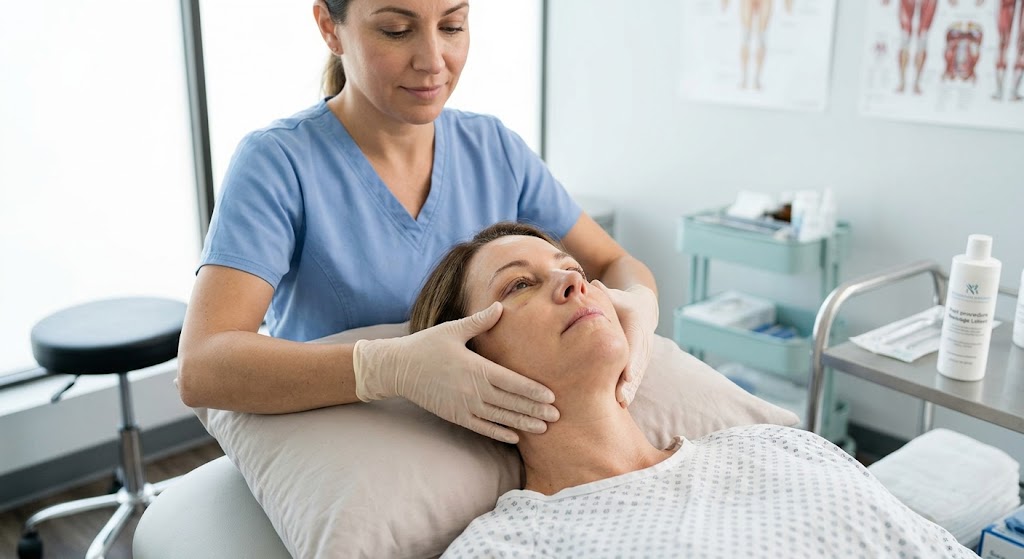
Blepharoplasty can take years off your eyes, but the recovery process is where your results are truly made or broken. Swelling, bruising, and that heavy feeling around your lids can linger longer than most patients expect. One tool that genuinely helps, when used correctly, is lymphatic massage.
- What Is Blepharoplasty?
- Understanding Recovery Process After Blepharoplasty
- What Is Lymphatic Massage After Blepharoplasty?
- Can Lymphatic Massage Help?
- Benefits of Lymphatic Massage After Blepharoplasty
- How to Perform Lymphatic Massage After Blepharoplasty?
- What to Avoid During Blepharoplasty Recovery?
- Professional vs. At-Home Lymphatic Massage
- Why Choosing the Right Surgeon Matters for Recovery?
- Conclusion
This guide walks you through everything you need to know about eyelid massage after Blepharoplasty Raleigh NC, from timing and technique to what to avoid and when to call your surgeon.
What Is Blepharoplasty?
According to MedlinePlus (U.S. National Library of Medicine), eyelid surgery also known as Blepharoplasty corrects drooping or sagging eye lids.
In this surgery, the procedure involves removal of excess skin, reducing puffiness, and smooths wrinkles. There are different types of Blepharoplasty. Upper and Lower.
Upper blepharoplasty tackles sagging lids whereas lower blepharoplasty targets under-eye bags and laxity. It’s a delicate procedure, your eyelids are the thinnest skin on your body.
At Jiya Cosmetic, blepharoplasty is performed by Dr. Sumeet Jindal, a board-certified ophthalmologist and fellowship-trained oculofacial surgeon specializing in eyelid procedures. His background in both eye medicine and facial surgery means every case is handled with a level of anatomical precision that general plastic surgeons may not provide.
Understanding Recovery Process After Blepharoplasty
This is the most intense phase. The tissue is actively healing and applying pressure too early can set your recovery back.
- Days 1–3: Expect swelling, bruising, and tightness. Cold compresses and head elevation are your best friends. Don’t even think about massage yet.
- Weeks 1–2: Bruising fades, swelling drops, and stitches come out. You’ll look better, but your lids still feel stiff.
- Weeks 3–6: Most swelling is gone. You can ease back into normal routines.
- Months 3–6: Final results settle. Tiny amounts of swelling can linger which is normal.
What Is Lymphatic Massage After Blepharoplasty?
Lymphatic massage, also called manual lymphatic drainage, is a gentle technique designed to encourage the movement of excess fluid out of swollen tissue and back into the body’s lymphatic system. After surgery, the lymphatic vessels near the incision sites can become temporarily disrupted, which causes fluid to pool and creates the puffiness you see during recovery.
Unlike a traditional massage, lymphatic drainage uses extremely light pressure and slow, directional strokes. The goal is to redirect fluid, not to work deep into muscle or tissue. In the context of blepharoplasty recovery, it is applied around the eye area with careful attention to avoiding any direct contact with healing incisions.
It is recommended post-surgery because it actively supports what your body is already trying to do: clear the fluid, reduce inflammation, and restore normal circulation to the treated area.
Can Lymphatic Massage Help?
Yes, when done gently and with your surgeon’s green light. Lymphatic drainage moves excess fluid away from your eyes, reducing swelling and discomfort. According to the National Institutes of Health, manual lymphatic drainage can speed up post-surgical edema resolution when applied correctly.
Benefits of Lymphatic Massage After Blepharoplasty
When started at the right time and done with proper technique, lymphatic massage after blepharoplasty offers real, noticeable improvements during recovery.
Research published on PubMed (National Institutes of Health) found that manual lymphatic drainage significantly reduced postoperative facial swelling compared to untreated controls after facial surgery. A separate review published in PMC (NIH/NLM) confirmed that MLD shows meaningful potential for improving postoperative swelling specifically in the periorbital (eye) region after eyelid procedures.
Here is what patients generally notice:
- Faster reduction in puffiness around the eyes and upper cheeks
- Quicker fading of bruising by improving local circulation
- Lighter, less heavy eyelids as accumulated fluid is cleared
- Reduced discomfort and tightness during the healing phase
- Smoother overall recovery with less prolonged swelling
These benefits make it one of the more practical post-blepharoplasty care tips surgeons recommend, provided the timing is right.
How to Perform Lymphatic Massage After Blepharoplasty?
Once your surgeon has cleared you, technique matters just as much as timing. Here is a step-by-step approach to eyelid massage after blepharoplasty.
Prep: Clean hands, dry face. No lotions unless your surgeon says so.
Technique: Use your fingertips to make gentle, outward strokes—away from your eyes. Never rub directly over stitches. Think “feather-light,” not “massage.”
Frequency: 1–2 times daily, max. Stop if you see redness, pain, or more swelling.
What to Avoid During Blepharoplasty Recovery?
Good aftercare is as much about what you do not do as what you do. Certain habits can delay healing, worsen swelling, or affect your final results.
- Rubbing or pressing on your eyes, even when they itch or feel irritated
- Strenuous exercise or heavy lifting for at least the first two weeks, as increased blood pressure worsens swelling
- Smoking and alcohol, both of which slow tissue healing and increase bruising
- Direct sun exposure on healing incision lines, since UV exposure darkens scars significantly
- Starting massage too early, before incisions have properly closed
- Applying pressure near the incision sites, even once massage has been cleared
The recovery restrictions your surgeon gives you are there to protect the results you invested in. Following them carefully makes a measurable difference.
Professional vs. At-Home Lymphatic Massage
For most patients, at-home lymphatic massage is completely appropriate once surgical clearance is given. The technique is simple enough to learn and the light pressure required does not demand professional training.
That said, there are situations where working with a professional trained in post-surgical facial care makes sense. If swelling is still significant after three weeks, if you had a more complex procedure involving both upper and lower eyelids, or if you simply feel uncertain about technique, a certified lymphatic drainage therapist can provide more targeted care.
The most important factor when choosing a professional is that they understand post-surgical protocols. They should work in coordination with your surgeon’s guidelines, not independently of them. A therapist who applies too much pressure or works over areas that are still healing can cause more harm than good.
At-home massage suits most cases. Professional support is worth considering when recovery is slower than expected or the swelling is more pronounced.
Why Choosing the Right Surgeon Matters for Recovery?
The quality of your recovery is not determined by aftercare alone. The surgeon who performs your blepharoplasty has a significant impact on how much swelling and bruising you experience, how quickly your incisions heal, and how natural your final results look.
An oculofacial surgeon brings a level of specialization that goes beyond general cosmetic training. The eyelids are among the most structurally complex and delicate areas on the face, involving thin skin, precise musculature, and proximity to the eye itself. A surgeon who focuses specifically on this anatomy understands how to minimize tissue trauma, place incisions within natural folds, and reduce the disruption to lymphatic vessels that causes prolonged swelling.
Dr. Sumeet Jindal at Jiya Cosmetic is both a board-certified ophthalmologist and a fellowship-trained oculofacial surgeon. His dual training in eye medicine and facial surgery gives him a comprehensive understanding of eyelid anatomy that directly translates into more precise surgery, a less traumatic recovery, and a personalized aftercare plan built around your specific healing pattern. Patients who choose a specialist at this level often find that their recovery is both faster and more comfortable than they expected.
Conclusion
Lymphatic massage is a genuinely useful tool in blepharoplasty recovery, but it is one part of a broader aftercare plan. Timing, technique, consistency, and surgeon guidance all matter. Start at the right point, keep pressure light, stay consistent, and pay attention to how your body responds.
Most importantly, your recovery begins before surgery with the choice of surgeon. A specialist who understands eyelid anatomy at a deep level, like Dr. Jindal at Jiya Cosmetic, gives you the foundation for both a safer procedure and a faster, more comfortable healing process.
If you are considering eyelid surgery in Raleigh or have questions about the recovery process, reach out to the Jiya Cosmetic team to schedule a consultation.
FAQs
Does lymphatic massage really help after blepharoplasty?
Yes, lymphatic massage after blepharoplasty may help reduce swelling and fluid buildup when it is done gently and at the right stage of healing. It should only be started after surgeon approval because the eyelid area is delicate after surgery.
How long does swelling last after eyelid surgery?
Most swelling after eyelid surgery improves within 2 to 3 weeks. However, subtle swelling can last for several months as the eyelids continue to settle and heal.
Can I massage my eyelids too early?
Yes. Starting eyelid massage after blepharoplasty too early can irritate healing tissue, increase swelling, or affect the incision area. Always wait until the surgeon confirms it is safe.
Is blepharoplasty recovery painful?
Blepharoplasty recovery is usually more uncomfortable than painful. Most patients feel tightness, swelling, bruising, or mild soreness around the eyes during the early healing stage.
How long do blepharoplasty results last?
Blepharoplasty results often last 5 to 10 years. Longevity depends on skin quality, age, genetics, sun exposure, lifestyle, and how well the patient follows aftercare instructions.