

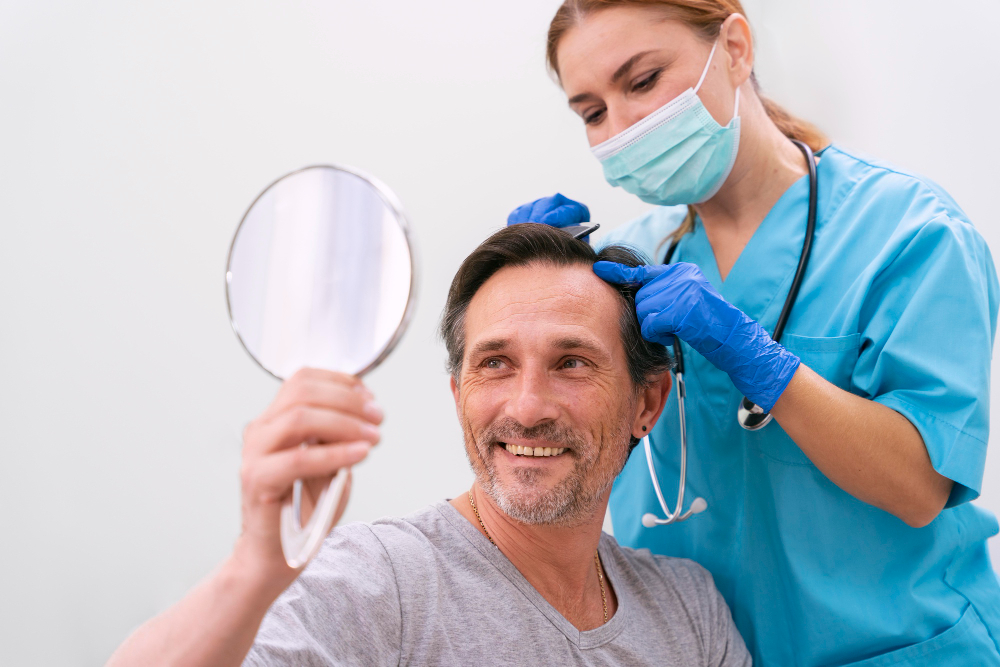
Understanding the hair transplant recovery timeline is necessary for achieving the best results and managing expectations. This day-by-day guide covers everything a person needs to know about the healing process, from immediate post-surgery care to full hair growth maturity.
- What Is Hair Transplant Recovery?
- Hair Transplant Recovery Timeline: Day-by-Day (Days 0-14)
- Week-by-Week Recovery Milestones (Weeks 2-8)
- Month-by-Month Growth Timeline (3-18 Months)
- Female Hair Transplant Recovery: What Is Different?
- Male Hair Transplant Recovery: Typical Timeline
- Common Misconceptions About Hair Transplant Recovery
- Red Flags: When to Contact the Surgeon
- Tips for Faster and Safer Hair Transplant Recovery
- Take the Next Step With Jiya Cosmetic
At Jiya Cosmetic, Dr. Jindal’s expertise in hair transplant in Raleigh, NC, ensures patients receive detailed recovery guidance tailored to their specific needs. Whether they are considering a procedure or have just completed one, this timeline will help them navigate their recovery journey with confidence.
What Is Hair Transplant Recovery?
Hair transplant recovery covers two distinct phases. The first is initial healing, which lasts approximately 10 to 14 days and involves graft stabilization, scab formation, and wound closure. The second is long-term regrowth, which extends up to 18 months as transplanted follicles establish a blood supply and produce new hair.
Recovery patterns differ between male and female patients. Women often retain surrounding hair that helps conceal the treated area, while men frequently undergo larger sessions that extend the physical recovery window. JIYA offers specialized protocols for both female hair transplant and male hair transplant patients in Raleigh, NC.
Hair Transplant Recovery Timeline: Day-by-Day (Days 0-14)
Day 0: Surgery Day
The transplanted area is bandaged immediately after the procedure. Patients receive detailed aftercare instructions before leaving the clinic. Rest is non-negotiable during the first 24 hours. Keeping the head elevated at a 45-degree angle reduces swelling and protects newly placed grafts from pressure or displacement.
Days 1-3: Initial Healing Phase
Swelling peaks during this window, often extending toward the forehead and eyes. Small scabs begin forming around each graft site, which signals proper healing rather than a complication. Key steps during this phase include:
- Sleeping with the head elevated using multiple pillows
- Avoiding all contact with the transplanted area
- Following the surgeon’s prescribed washing schedule to maintain graft integrity
Days 4-7: Scabbing and Itching Phase
Scabs become more visible, and itching intensifies as the skin heals. Scratching or picking at scabs carries a real risk of dislodging grafts. Gentle washing with a prescribed shampoo helps manage discomfort. Most patients are cleared to return to desk work by Day 5, though all strenuous activity must still be avoided.
Days 8-14: Scab Resolution
Scabs naturally begin shedding between Days 8 and 14. The recipient area appears less inflamed and is beginning to normalize in color. Light daily activities and gentle walking are appropriate for most patients. Continue the prescribed washing routine to complete scab removal without forcing the process.
Quick Reference: Normal vs. Warning Signs
| Normal Recovery Signs | Warning Signs (Contact Surgeon) |
| Mild swelling | Severe swelling after Day 7 |
| Scab formation | Excessive bleeding |
| Itching sensation | Severe or worsening pain |
| Pinkish skin tone | Signs of infection: pus or fever |
| Gradual scab shedding | Delayed healing beyond 2 weeks |
Also Read: FUE vs FUT Hair Transplant Recovery Timeline: Which Heals Faster?
Week-by-Week Recovery Milestones (Weeks 2-8)
Weeks 2-4: The Shedding Phase
Transplanted hairs enter a natural shedding phase during this period. Follicles temporarily enter a resting state called telogen before cycling into an active growth phase. This is a normal part of the hair transplant recovery timeline and does not indicate a failure of the transplant. According to the American Academy of Dermatology, shedding after hair transplant surgery is expected and is temporary. Patients should continue gentle hair care and apply SPF protection when spending time outdoors.
Weeks 5-8: The Dormant Period
The scalp appears quiet during this phase with minimal visible change. Beneath the surface, transplanted follicles are building a blood supply and preparing for active growth. This is often the most psychologically challenging stretch of recovery because the results are not yet visible. Maintaining the washing routine and following nutritional guidelines supports the follicles during this critical period.
Month-by-Month Growth Timeline (3-18 Months)
Hair growth after transplant follows a gradual arc. The table below outlines expected progress at each stage:
| Timeframe | What to Expect | Visible Results |
| Month 1 | Healing continues, shedding peaks | Minimal visible hair |
| Months 2-3 | Fine hairs begin emerging | 10-20% growth |
| Months 4-6 | Noticeable regrowth accelerates | 30-50% density |
| Months 9-12 | Significant coverage improvement | 60-80% of final result |
| Months 12-18 | Full graft maturity and thickening | 90-100% complete |
Most patients reach 60 to 80 percent of their final density by Month 12. Full graft maturity, including final texture and thickness, develops between Months 12 and 18.
Female Hair Transplant Recovery: What Is Different?
Female hair transplant recovery shares the same general phases as male recovery but differs in ways that matter for planning and expectation-setting. The distinctions include:
- Less dramatic shedding: Existing hair around the transplant zone provides coverage, making the shedding phase less visually noticeable.
- Faster initial growth: Hormonal factors can accelerate early regrowth in some female patients.
- Greater styling flexibility: Women can often use surrounding hair to conceal treated areas during the early recovery weeks.
JIYA’s approach to female hair transplant in Raleigh, NC, includes recovery protocols tailored to these specific physiological and aesthetic needs. Patients interested in guidance on female hair transplant recovery are encouraged to schedule a consultation at JIYA’s Raleigh facility.
Male Hair Transplant Recovery: Typical Timeline
Men tend to undergo larger transplant sessions, which introduces some differences in how recovery progresses and how long it takes to see final density:
- Larger session sizes: Men undergoing extensive procedures may experience a heavier shedding phase and require additional time before full density is visible.
- Delayed return to sports: Sports and intense workouts should be avoided for at least three weeks to prevent graft displacement.
- Extended maturity timeline: Full results for large sessions may not be apparent until Month 18.
JIYA’s male hair transplant in Raleigh, NC, includes customized recovery planning tailored to the scope of each procedure along with FUE & FUT Hair Transplant.
Common Misconceptions About Hair Transplant Recovery
Several persistent myths cause unnecessary anxiety during recovery. The facts are straightforward:
- Showering ruins grafts: Gentle washing with lukewarm water and prescribed shampoo is safe after 48 hours and is actually required for proper healing.
- Shedding means the transplant failed: Shedding in weeks two through four is a normal part of the follicular growth cycle, not an indicator of failure.
- Recovery should be painless: Mild discomfort during the first several days is expected. Severe or escalating pain, however, warrants a call to the surgeon.
Red Flags: When to Contact the Surgeon
Certain symptoms require prompt medical attention. Patients should contact their surgeon immediately if any of the following occur:
- Severe swelling that persists beyond Day 7
- Excessive bleeding from the recipient or donor area
- Severe pain that does not respond to prescribed medication
- Signs of infection, including pus, persistent redness, or fever
- Delayed healing beyond two weeks without visible improvement
The U.S. National Library of Medicine outlines standard benchmarks for wound healing that can help patients assess whether their recovery is progressing appropriately.
Tips for Faster and Safer Hair Transplant Recovery
Following a structured aftercare routine directly affects the quality of final results. The most important practices include:
- Sleeping position: Keep the head elevated for the first week using multiple pillows or a recliner to minimize swelling.
- Washing routine: Use only prescribed products and lukewarm water. Follow the surgeon’s instructions precisely on timing and technique.
- Exercise restrictions: Avoid all strenuous physical activity for at least three weeks post-procedure.
- Alcohol: Abstain from alcohol for a minimum of one week to reduce bleeding risk.
- Sun exposure: Protect the scalp from direct sunlight during the first month with a hat or SPF spray.
- Nutrition: A protein-rich diet with adequate B vitamins, zinc, and iron supports follicle health and accelerates regrowth.
Take the Next Step With Jiya Cosmetic
Hair transplant results build slowly, but the milestones are consistent and predictable. Understanding the hair transplant recovery timeline. Tracing the full arc from Day 0 through Month 18 gives patients the knowledge to make sound decisions at each stage and achieve results that reflect the procedure’s full potential.The Jiya Cosmetic brings specialized experience to both male hair transplant and female hair transplant procedures in Raleigh, NC. Every patient receives a personalized recovery protocol designed to protect graft survival and maximize long-term density. For patients ready to begin their hair restoration journey with a team that prioritizes outcomes and supports every step of recovery, JIYA is the clear choice in Raleigh. Contact Us on (919) 929-6006 to schedule a consultation and take the first step toward natural-looking, lasting results.
FAQs
How long does hair transplant recovery take?
Initial healing is usually 10–14 days, but full hair results can take 12–18 months.
What should I avoid after a hair transplant?
Avoid scratching scabs, heavy exercise, alcohol (about 1 week), direct sun, and anything that rubs the grafts.
When can I wash my hair after a hair transplant?
Many patients can start gentle washing around 48 hours, but only as your surgeon instructs.
Is swelling normal after a hair transplant?
Yes. Swelling often peaks around days 1–3 and improves afterward.
When do scabs fall off after a hair transplant?
Scabs commonly shed naturally around days 8–14. Don’t pick them.
Is shedding after a hair transplant normal?
Yes. “Shock loss”/shedding often happens in weeks 2–4 and is expected.
When will I see new hair growth?
New hairs may start around months 2–3, with clearer change by months 4–6.
When can I return to work after a hair transplant?
Desk work is often possible in 5–7 days. Physical jobs may need 2–3 weeks.
What makes female hair transplant recovery different?
Women tend to experience less dramatic shedding due to surrounding hair coverage. Hormonal differences can also contribute to faster initial regrowth in some patients.
What is the male hair transplant recovery timeline?
Male patients follow the same general milestones, though larger procedure sizes may extend visible results and require a longer window before returning to intense physical activity.