


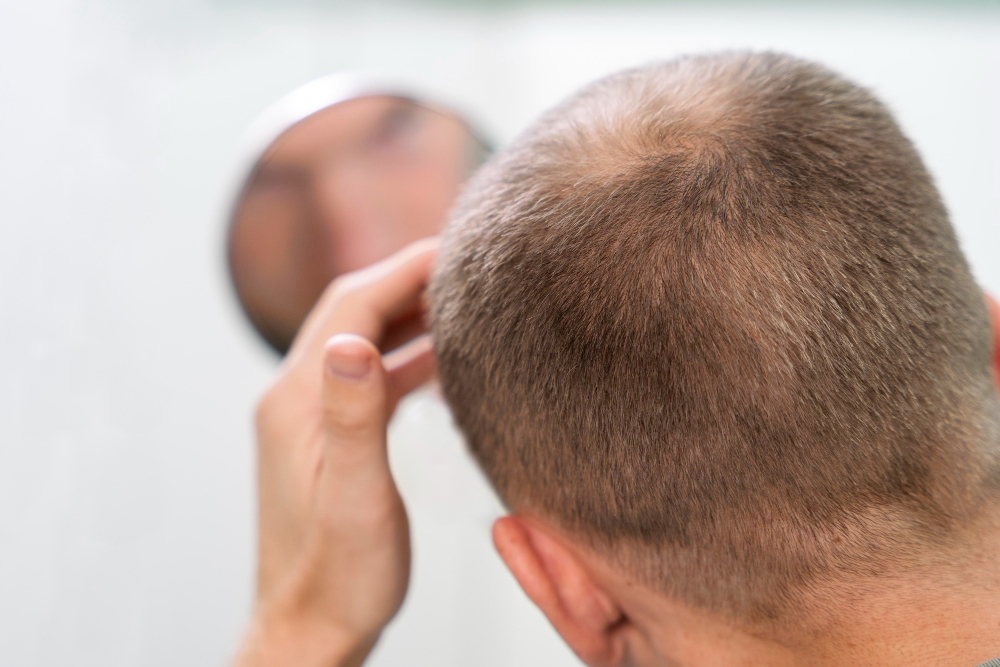
Hair loss often starts with small changes that are easy to dismiss. A little extra shedding, a thinner ponytail, or a hairline that looks different in photos. When baldness runs in the family, these signs can raise an uncomfortable question: Is this genetic, and is it unavoidable? Genetic hair loss tests claim to offer clarity, but many people are unsure how much trust to place in the results.
This guide breaks down how genetic hair loss testing works and how accurately it can predict baldness.
What Is a Genetic Hair Loss Test?
A genetic hair loss test is a DNA-based test (often using saliva) that looks for specific genetic markers linked to hereditary hair loss, medically known as androgenetic alopecia.
It is the most common cause of pattern hair loss worldwide and affects both men and women. It usually follows a pattern (for example, hairline recession and crown thinning in men, and widening part or thinning on top in women).
A Key Point Most People Miss
There is no single baldness gene. This type of hair loss is polygenic. It means many genes play small roles, and other factors also matter.
How Do These Tests Try To Predict Hair Loss?
Most genetic hair loss tests look at many different genes at the same time. Instead of relying on one gene, they combine several genetic markers into a single score that estimates your risk of hair loss. This is often called a polygenic risk score.
Research published in PLOS Genetics found that this type of scoring can help identify people who may have a higher or lower risk of hair loss, especially when age is also considered. Even so, these results are still based on likelihood, not guarantees, and they cannot predict exactly what will happen.
So, Can a Genetic Hair Loss Test Predict Baldness Accurately?
It depends on what you mean by “accurately.”
What it can do well
A genetic hair loss test can sometimes:
- Identify whether your genetics place you in a higher-risk group for pattern hair loss
- Help explain why hair loss “runs in the family”
- Support earlier planning if your risk is high (for example, monitoring and prevention)
What it cannot do reliably
A genetic hair loss test usually cannot:
- Predict the exact age at which hair loss will start
- Predict the exact pattern (hairline vs crown vs diffuse thinning)
- Predict how fast it will progress
- Guarantee outcomes (some high-risk people keep good density, and some lower-risk people still thin)
ALSO READ: Cristiano Ronaldo Hair Transplant: Hair Transformation Facts Explained
Why Genetic Test Results Cannot Fully Predict Baldness
- Hair loss is not only about genes
Genes matter, but they are not the only reason people lose hair. Age and hormones also play a big role. Some people’s hair follicles are more sensitive to certain hormones, which can lead to thinning over time, even if their genes are not the same. - Most tests show risk, not a sure answer
Genetic hair loss tests do not give a diagnosis. They only show how likely something might be. Even if a test says you have a higher risk, it does not mean you will definitely lose your hair, because lifestyle and environment also affect hair health. - Results can be less accurate for some people
Many genetic tests are made using data from specific populations. If your background was not well represented when the test was created, the results may not be as accurate for you. This means the risk estimate may not fully match what happens in real life.
Genetic Hair Loss Test vs. What a Clinician Can See
A genetic hair loss test is only one piece of the puzzle. A clinician can often learn a lot from:
- Pattern and distribution of thinning
- Scalp exam and dermoscopy
- Family history
- Timing and triggers (stress, illness, postpartum, medication changes)
- Labs when needed (iron, thyroid, vitamin D, hormones)
This matters because not all hair loss is genetic. Some types are temporary and treatable, like telogen effluvium after stress or illness.
Who Should Consider a Genetic Hair Loss Test?
A genetic hair loss test may be useful if:
- You have a strong family history of pattern hair loss
- You are seeing early thinning and want more clarity
- You want to be proactive and track changes early
- You are comparing treatment options and want a better context
It may be less useful if you currently have sudden heavy shedding or patchy hair loss, which can point to different causes that need medical evaluation.
How to Use Genetic Results in a Smart Way
If your results suggest a higher risk, don’t panic. The best use is planning.
What planning can look like
- Take clear photos of your hair once a month in the same lighting to notice changes.
- Pay attention to how much hair you shed and whether your hair looks thinner over time.
- Start a treatment plan early, when hair follicles are more likely to respond.
- Get a professional check so you know what type of hair loss you are dealing with and can treat it correctly.
And if your results show lower risk, it does not mean you can ignore thinning. You still might have hair loss from stress, hormones, nutrition issues, or scalp inflammation.
What to Do Next If You Are Worried About Hair Loss
If you are concerned about thinning, here are some simple next steps:
- Get a proper diagnosis first. Pattern hair loss and other hair loss types can look similar early on.
- Use genetics as a supporting tool, not a final answer. The inheritance pattern is complex.
- Treat early if needed. Earlier action often helps maintain density longer. A clinician can guide you to which options match your situation.
If you are worried about hair loss and want clear, personalized guidance, a professional evaluation can make a meaningful difference. At JIYA Cosmetic, we focus on understanding the root cause of hair thinning through detailed scalp assessment, medical history review, and advanced diagnostic tools. Call us at (919) 929-6006 to book an appointment.
FAQs
How accurate is a genetic hair loss test?
A genetic hair loss test can estimate your risk, but it cannot predict with certainty if, when, or how fast you will lose hair.
Can a genetic hair loss test tell me when I will go bald?
No, most tests cannot reliably predict timing, and research shows age is a major factor that changes risk and outcomes.
Is male pattern baldness genetic?
Yes, it has a strong genetic component, but it is also influenced by hormones and aging, so it is not determined by a single gene.
Is female pattern hair loss genetic too?
Yes, androgenetic alopecia affects both men and women, and genetics can increase risk in both.
If my test says “high risk,” does that mean I will definitely go bald?
No. The FDA notes that a positive direct-to-consumer genetic risk result does not mean you will develop the condition.
Do genetic hair loss tests work equally well for everyone?
Not always. Many polygenic risk scores perform best in the ancestry groups on which they were built, and accuracy may drop in underrepresented populations.
Should I rely on a genetic hair loss test instead of seeing a specialist?
It is better to use it as extra information, not a replacement, because other types of hair loss can mimic pattern loss and may need different treatment.