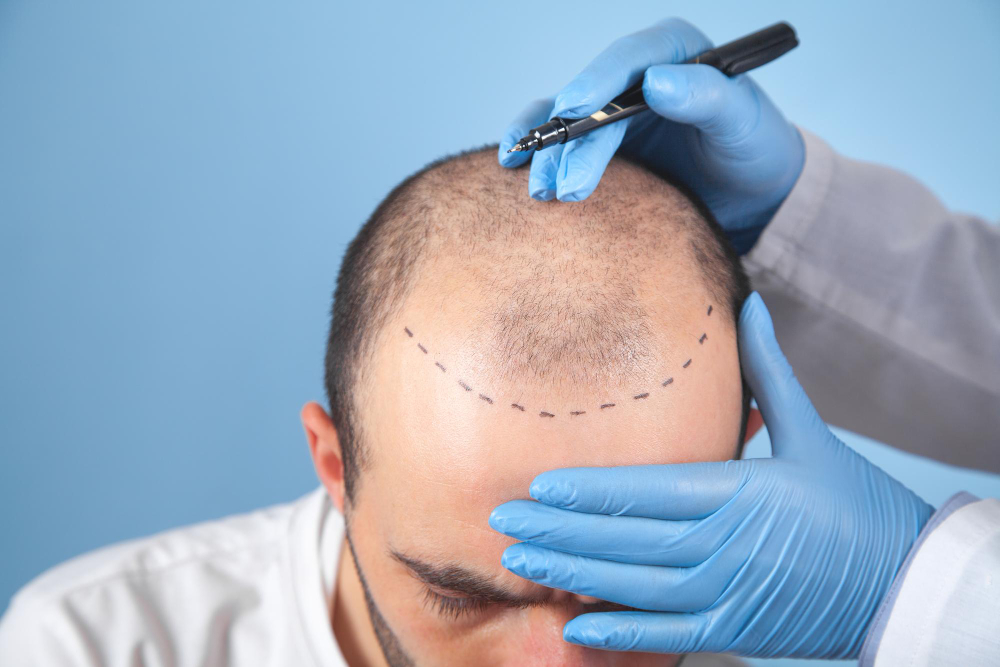
Hair transplant surgery has advanced considerably over the past two decades. Today, patients have access to techniques that deliver natural-looking results with less visible scarring and shorter overall downtime than older methods allowed. FUE, or Follicular Unit Extraction, and FUT, or Follicular Unit Transplantation, remain the two primary approaches used in modern hair restoration. Each has a distinct method of harvesting donor follicles, a different scarring profile, and a recovery process that unfolds on its own timeline.
For patients comparing the two, understanding those differences helps set realistic expectations and reduces the uncertainty that often surrounds the post-procedure period. Rushing back to physical activity too early or neglecting aftercare instructions can compromise results, which is why recovery deserves as much attention as the procedure itself.
What Are FUE Hair Transplants?
FUE, or Follicular Unit Extraction, removes individual follicular units from the donor area, usually at the back and sides of the scalp. It is commonly chosen because it avoids a long linear incision and is often associated with less visible donor scarring.
What Are FUT Hair Transplants?
FUT, or Follicular Unit Transplantation, removes a strip of hair-bearing scalp from the donor area. That strip is then divided into follicular units for implantation. FUT can be a good option for patients who need a larger number of grafts, but it does involve a linear donor scar and sutures or staples at the donor site.
FUE vs FUT at a glance
| Feature | FUE | FUT |
| Donor harvesting | Individual follicles | Strip of scalp |
| Donor scar | Small dot scars | Linear scar |
| Early cosmetic healing | Often faster | Often slightly longer |
| Donor area care | Simpler | Includes suture or staple care |
| Best for | Patients wanting shorter hairstyles or less visible scarring | Patients needing larger sessions or specific donor planning |
Both methods can produce natural-looking results, but the recovery time for FUT hair transplant is usually a little longer in the donor area than the FUE hair transplant recovery time.
Why Recovery Timeline Matters
Recovery affects work, exercise, sleep, grooming, and social comfort. The NHS notes patients may need one to two weeks off work after a hair transplant and should be especially careful with grafts during the first two weeks. Exercise may need to be reduced in the first month.
Small crusts often fall off within seven to ten days, many patients take about one week off work, light exercise may resume in about two weeks, and more physical activity may wait longer. That is why a realistic recovery timeline helps patients choose between FUE and FUT with fewer surprises.
FUE Hair Transplant Recovery Timeline
Day 0 to Day 3
Early FUE hair transplant recovery usually includes mild redness, swelling, tenderness, and the start of small scabs around grafts. A 2026 review of FUE complications notes that swelling often peaks around days two to three and usually settles within five to seven days.
Day 4 to Day 7
This is when many patients notice that scabs begin to loosen and the scalp starts to look calmer. The donor area is often easier to manage than with FUT because there is no long incision. Many patients can return to non-strenuous work around this stage, depending on comfort and visible healing.
Weeks 2 to 6
This part of the FUE hair transplant recovery process often includes shedding of transplanted hairs, sometimes called shock loss. Shedding can happen after the procedure and new hairs typically begin to appear after about three to six months.
Months 3 to 4
New growth often begins to show. Hair may look fine at first, then slowly become stronger and thicker over time. After shedding, hair growth resumes after several weeks and then grows gradually.
Months 6 to 12
This is when patients usually see meaningful cosmetic improvement. Hair continues to mature over the following months. For many patients, this is the phase when the fue hair transplant recovery timeline starts to feel worth it.
FUT Hair Transplant Recovery Timeline
Day 1 to Day 7
Early FUT hair transplant recovery usually includes donor area tightness, soreness, and care around sutures or staples. Because FUT involves a strip incision, the donor area often needs more attention than FUE in the first week.
Day 7 to Day 14
This part of the FUT hair transplant donor area recovery process is when sutures or staples may be removed, depending on the surgeon’s plan.
Weeks 2 to 6
Like FUE, FUT patients can also go through shedding in the transplanted area. The difference is that the donor site may still feel tighter or more noticeable for longer. This is why the FUT hair transplant recovery time is often considered slightly longer in the early stage.
Months 3 to 9
New growth becomes more visible. Density improves gradually as the transplanted follicles re-enter growth.
Months 12 to 18
Final FUT results can continue to mature over a longer arc. Many patients see strong improvement well before that, but full cosmetic maturity can take more time.
FUE vs FUT: Side-by-Side Recovery Comparison
| Feature | FUE | FUT |
| Initial healing time | About 5 to 7 days cosmetically | About 10 to 14 days for more complete early healing |
| Scarring | Small dot scars | Linear scar |
| Return to work | Often faster | Slightly longer |
| Donor area recovery | Usually simpler | Requires incision care |
In simple terms, FUE usually heals faster on the surface, while FUT may involve more donor area tension and aftercare in the first one to two weeks. Both methods still follow a similar long-term hair growth pattern after the early healing phase.
What Affects Recovery Time?
Recovery is not exactly the same for every patient. A few things can change the timeline:
- Overall health and age
- The number of grafts placed
- Whether the procedure is FUE or FUT
- How closely aftercare instructions are followed
- Surgeon technique and donor area planning
Conclusion
When comparing FUE vs FUT hair transplant in Raleigh, recovery can be one of the biggest deciding factors. FUE usually has a quicker cosmetic recovery, especially in the donor area. FUT can still deliver excellent results, but the initial recovery is often a little longer because of the strip harvest and suture care. For patients looking into hair transplant options, the right choice depends on the amount of hair loss, donor supply, hairstyle goals, and how much downtime feels manageable.Patients searching for male hair transplant in Raleigh, NC or female hair transplant in Raleigh, NC, often want a clinic that treats recovery as seriously as the procedure itself. JIYA Cosmetic offers hair restoration options for both men and women in Raleigh. Call us at 919-929-6006 to book a consultation.
FAQs
How long is FUE hair transplant recovery?
FUE healing on the scalp usually takes about 5 to 7 days, but shedding and regrowth continue for several months. New hair often starts to appear around 3 to 6 months, with fuller improvement over 6 to 12 months.
How long is FUT hair transplant recovery?
FUT recovery usually takes about 10 to 14 days for early healing because the donor area also needs time to recover. Hair shedding is normal after surgery, and new growth usually begins in 3 to 6 months.
Which heals faster - FUE or FUT?
FUE usually heals faster because it does not involve a strip incision or sutures in the donor area. FUT often needs a little more healing time in the first one to two weeks.
Will I need time off work after my transplant?
Most patients need about 1 week off work, and some may need 1 to 2 weeks depending on the procedure and their job.
Do I have to avoid exercise?
Yes. Most patients need to limit exercise early on, especially during the first couple of weeks. More strenuous workouts are often delayed longer based on healing and the surgeon’s advice.